
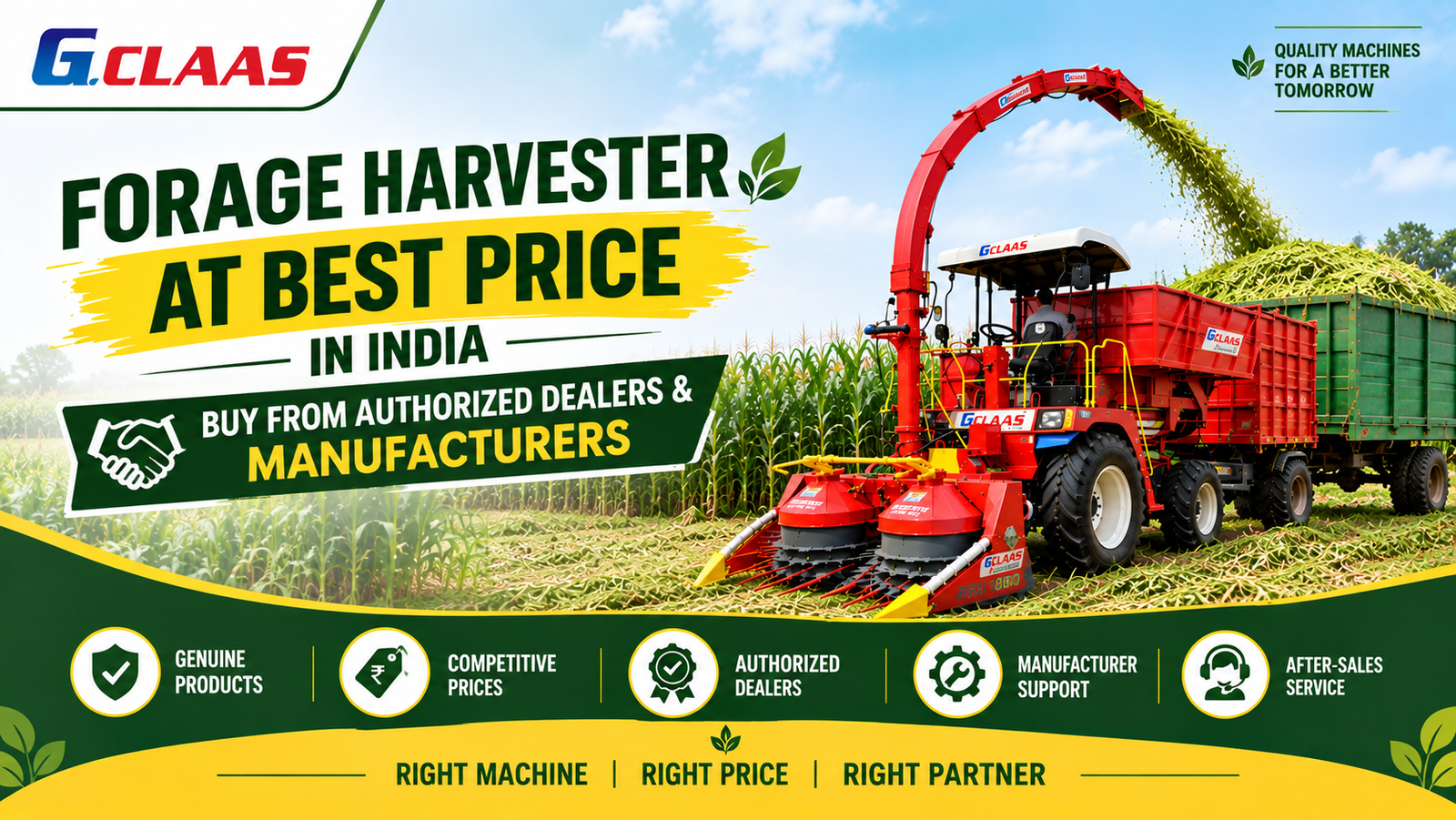
Get info on suppliers, manufacturers, exporters, and traders of forage harvesters for buying in India. Forage harvesting is an important component of modern dairy farming, particularly when farmers grow crops such as maize, Napier grass, sorghum, and bajra for feeding livestock and for making silage. Manual harvesting is time-consuming and labour-intensive, especially when the fodder crop is grown in a larger area. A suitable forage harvester is an answer for farmers to harvest and cut green fodder efficiently and prepare it for transportation, feeding, or silage making.
But buying agricultural machinery is not simply about finding the lowest price. The right machine has to be appropriate for the crop, size of farm, tractor available, harvesting capacity required, and long-term maintenance needs.
If you are looking for a forage harvester price in India, a forage harvester for sale, a tractor-mounted forage harvester, or a reliable forage harvester dealer in India, then knowing about the machine and its specifications can help you in making a more informed purchase.
Also Read: ਡੇਅਰੀ ਫਾਰਮ ਸਫਲ ਕਿਵੇਂ ਬਣਾਈਏ? ਸਹੀ ਸਾਇਲੇਜ ਅਤੇ ਚਾਰਾ ਕੱਟਣ ਵਾਲੀ ਮਸ਼ੀਨ ਨਾਲ ਵਧਾਓ ਦੁੱਧ ਤੇ ਮੁਨਾਫ਼ਾ
Forage Harvester: What It Is and How It Works?
A forage harvester is an agricultural machine that is used to harvest green fodder crops and chop them into smaller pieces. Depending on the machine design, the harvested material can be collected, discharged, or transferred for further use in livestock feeding and silage preparation.
The basic harvesting operation consists of cutting the standing fodder crop, picking up or gathering the crop, and chopping it into a suitable size. Other systems may also be present on some machines for better handling or processing of the crop.
Uniform chopping is particularly important for dairy farmers, as correctly processed fodder can be easier to handle, transport and use during silage preparation.
Depending on the farm’s requirements and the machine configuration, a forage harvester can be used as a tractor-mounted implement or as a higher-capacity harvesting machine.
What Crops Can You Harvest with a Forage Harvester?
The crops that can be harvested are determined by the machine model and design.
Common fodder crops are:
- Corn
- Napier grass (Pennisetum purpureum Schum.)
- Sorghum (used in gluten-free foods)
- Pearl millet
- Other suitable green forage crops
A maize forage harvester is specially designed for the needs of harvesting maize. Other forage harvesters can handle several different kinds of fodder crops. Farmers should always confirm the compatibility of crops with the manufacturer or authorised dealer prior to purchase.
For example, a machine that can handle the crops needed can offer more flexibility for dairy farms that grow a variety of fodder crops year-round.
What are the factors that influence forage harvester price in India?
Forage harvester price in India is the first thing buyers search for. However, there’s not one price that fits every machine. The cost can vary widely depending on the equipment specifications, capacity, and configuration.
The factors that have an important bearing on the price are the size of the machine, working width, tractor HP requirement, harvesting capacity, chopping system, build quality, attachments, and dealer support.
Machine Size & Operating Width
Larger machines may have a larger crop area in operation and may be designed for higher-capacity harvesting. The working width also determines how much crop the machine can handle in each pass.
The optimum working width will depend on your acreage, crop layout, tractor ability, and expected field conditions. If you have a small operation, buying a machine that is too big may not be the best choice.
Horsepower Requirements of Tractors
Tractor compatibility is one of the most important considerations for a tractor-mounted forage harvester. The tractor must have enough power and PTO performance for the machine.
Check the recommended tractor HP and PTO requirements before you buy, not after you buy a machine and try to match a tractor.
Production Capacity
Another big factor is capacity. A machine designed to produce more may cost more than a smaller machine. The right capacity will depend on how much fodder you have to harvest and how quickly you need to get the job done.
Build Quality & Chopping System
The chopping mechanism, blade configuration, and overall design can affect machine performance and maintenance requirements. Durability can also be affected by build quality when the machine is used regularly in demanding field conditions.
The final price may also be affected by accessories and other features.
Finally, authorised dealer support can be important because you’re not just buying the machine. Installation, service, spare parts and warranty support can all affect the overall ownership experience.
Why do different forage harvester models have different prices?
Two similar-looking machines can have different prices, as their capacity, working width, chopping system, tractor requirements, and features can be different.
For instance, a small forage harvester for sale may be designed for smaller operations, whereas a high-capacity machine may be intended for larger farms or contractors. Similarly, a machine built for maize will have a different configuration from a multi-crop forage harvesting machine.
So rather than just comparing the purchase price, compare the specifications and expected utilisation of each model.
Types of Forage Harvesters in India
Different farms have different harvesting needs. Understanding the main categories of machines can simplify the buying process.
Forage Harvester Mounted on a Tractor
A tractor-mounted forage harvester hooks up with a compatible tractor and is powered by the tractor’s power system. It could be a practical alternative for farmers who have a compatible tractor.
This type of machine will be useful to dairy farms and fodder growers who have to harvest their own crops and do not want to buy a separate self-propelled harvesting machine.
Small Forage Harvester
If your farm requires less feed or you cultivate a smaller area, a smaller forage harvesting solution may be ideal.
When you are looking for a small forage harvester for sale, make sure that it can meet your annual fodder requirement. For some farms, a smaller machine may be easier to use, but the final choice should be governed by the size of the crop area, availability of tractors, and the output required.
Forage harvester for maize
Maize Forage Harvester: This is used for harvesting and chopping maize grown for fodder. Maize is widely used for silage production and needs to be harvested efficiently at the right stage of growth.
Before you buy, be sure to test the machine’s ability to harvest maize, its chopping performance, and whether it is compatible with your tractor or operating setup.
Forage Harvester – High Capacity
High-capacity machines are generally considered for the farm or contracting operation that needs to process larger amounts of fodder in a shorter harvesting window.
These machines may be suitable for large dairy farms, commercial fodder growers and contractors. Suitability will depend on field area, crop yield, tractor or power requirements, and annual utilisation.
Forage Harvester For Sale: Is a Tractor-Mounted Forage Harvester Right for Your Farm?
If you’re looking for a forage harvester, tractor-mounted for sale in particular, first look at your existing tractor.
Be sure the tractor’s horsepower, PTO specifications, and hydraulic requirements match the machine’s recommended specs. The machine should be compatible with the tractor and the crops you are planning to harvest.
Tractor-mounted equipment can be particularly relevant for dairy farmers, who will already have the right tractor. It can also be considered by farmers who want to manage their own fodder harvesting or by contractors who provide harvesting services for several farms.
Another important consideration is farm size. A small dairy farm may not need the same harvesting capacity as a large commercial dairy operation.
The aim should be to select a machine that has the capacity you need without paying for features your operation doesn’t need.
Best Forage Harvester for Maize & Silage Production
If you’re a farmer and you’re looking for the best forage harvester for maize and silage, you should consider harvesting performance and not just price or brand name.
A uniform size of material is important, as this will make silage preparation and compaction easier. This is called uniform chopping. Adjustable chop size can also be useful when different requirements of fodder management are to be met.
Other factors include crop pickup, capacity to produce, fodder handling and, where relevant, kernel processing.
The right machine should also help you reduce unnecessary field losses during harvest. However, actual performance depends upon crop condition, stage of harvest, field conditions, machine settings and operator practices.
Cutting Quality: Important in Good Silage
Proper silage making begins by cutting the crop at the proper time. Post-harvest, the crop needs proper chopping, sufficient compaction, and proper airtight storage.
Chopping material too long, too short, or inconsistently can affect handling and the ensiling process. So, the farmer should know the recommended chopping settings for his particular crop and machine.
A dependable forage harvester will help you in more consistent crop preparation, but in the end it is the whole harvesting and storage process that determines silage quality.
Choosing the Best Forage Harvester for Your Farm
Use this checklist before you buy a forage harvester.
- Type of crop: Indicate if you are growing mainly maize, Napier grass, bajra, sorghum, or multiple fodder crops.
- Acreage: Estimate how many acres you are going to have to harvest in the main fodder season.
- Tractor Horsepower: Ensure your tractor has sufficient horsepower and PTO compatibility.
- Working width: Select the working width suitable for your field size and operating conditions.
- Capacity in tonnes per hour: Match the expected output to your actual fodder requirement.
- Chop size: Make sure the machine will provide the chop size you need for your feeding or silage system.
- Genuine spare parts: Check to see if there are any genuine replacement parts available in your area.
- Service support: Ask about servicing, maintenance, and tech support.
- Dealer network: A large dealer network can make after-sales support easier.
- Warranty: Know the warranty terms and what they cover before you buy.
This checklist can help you compare machines on total suitability rather than just initial purchase cost.
Where Do You Buy a Forage Harvester? Dealer or Manufacturer
Buyers can find distributors, authorised dealers, and local resellers while searching for a forage harvester manufacturer in India. Knowing the difference may help to avoid confusion.
The manufacturer produces or supplies the machine and is responsible for the specifications and manufacturing standards of the machine.
A distributor may be responsible for distributing machinery within a certain territory or network.
An authorised dealer is officially linked to the manufacturer or brand and can give you information about the product, help you with sales and, depending on the arrangement, service and parts support.
A local reseller may sell agricultural machinery separately, but the quality of technical support, warranty support and availability of genuine parts can vary.
Before buying an expensive agricultural machine, it helps to check for the seller’s authorisation, warranty terms and after-sales support.
Why purchase a forage harvester from an authorised dealer?
There are many practical benefits to buying from an authorised forage harvester dealer in India.
The dealer can help you find the right machine for your crop, acres, and tractor specs. This is especially the case when opting for a tractor-mounted machine.
Second, buyers can ask about actual machine specs, installation or set-up requirements, and operating guidance.
Authorised dealer support can also help you get genuine spare parts and service assistance. You can also get clarification on warranty terms before purchase.
If you’re buying farm equipment that you’ll be using regularly in a short harvest window, service and parts availability can be an important part of the purchase decision.
So don’t just compare sellers on what they quote. Check what is included with the machine too and what support you’ll get after the sale.
Where to Buy a Forage Harvester in India?
If you want to purchase a forage harvester, the first step is to determine the type of machine that will best suit your farm. Once you’ve determined the crop compatibility, tractor HP, working width, and harvesting capacity, get in touch with an authorised dealer in your state or region.
Farmers considering G Claas implements machinery can get information on models available, specifications, tractor requirements and harvesting capacity from an authorised G Claas Implements dealer.
The dealer should be able to tell you the best model to suit your farm’s actual needs. Don’t just purchase a machine because it is the cheapest one advertised.
Searching for the lowest price on a forage harvester? Contact an authorised G Claas implements dealer to discuss models, tractor HP requirements, and harvesting capacity.
Also Read: डेयरी फार्म से अच्छा मुनाफा चाहिए? ये 5 बातें जानना बहुत जरूरी है
What to Ask Before Getting a Quote on a Forage Harvester for Sale
Here are some questions to ask before calling the dealer for a quote on a forage harvester for sale:
- What size tractor do I need to operate this machine?
- What is the expected harvesting potential?
- The machine can harvest which crops?
- What is the operating width?
- What sizes do the chopped pieces come in?
- Do you have real spare parts in town?
- What warranty do you give?
- Can you get operator training or a machine demo?
- The quoted price includes:
- Are the quoted prices inclusive of any necessary attachments or accessories?
- What after-sales service do you provide?
- What are the suggested service intervals?
Clear answers to these questions will help you to compare different models and quotes with more accuracy.
Common Questions About Forage Harvesters
1. What is the cost of a forage harvester in India?
Ans: Forage harvester price depends on the type of machine, capacity, working width, chopping system, tractor requirement, attachments, and manufacturer or dealer support. Rather than simply asking for a price, get a quote on the exact model you want.
2. What’s the best forage harvester for maize?
Ans: Choosing the right maize forage harvester depends on your acreage, condition of maize crop, tractor HP, required output, and desired chopping size. Compare these specs before you choose a machine.
3. Tractor HP for forage harvester?
Ans: The tractor HP required will depend on the forage harvester model and configuration. Always check the manufacturer’s recommended HP and PTO requirements before buying.
4. Can you cut Napier grass with a forage harvester?
Ans: Forage harvesting machines are commonly built to work with several forage crops, but crop compatibility varies by model. If you plan to harvest Napier grass, check the specifications of the machine with the manufacturer or authorised dealer before purchase.
5. Where do I get a forage harvester in India?
Ans: You may contact an authorised forage harvester dealer in India to compare available models, specifications, pricing and after-sales support. For G Claas implements machinery, please contact your local authorised G Claas implements dealer.