
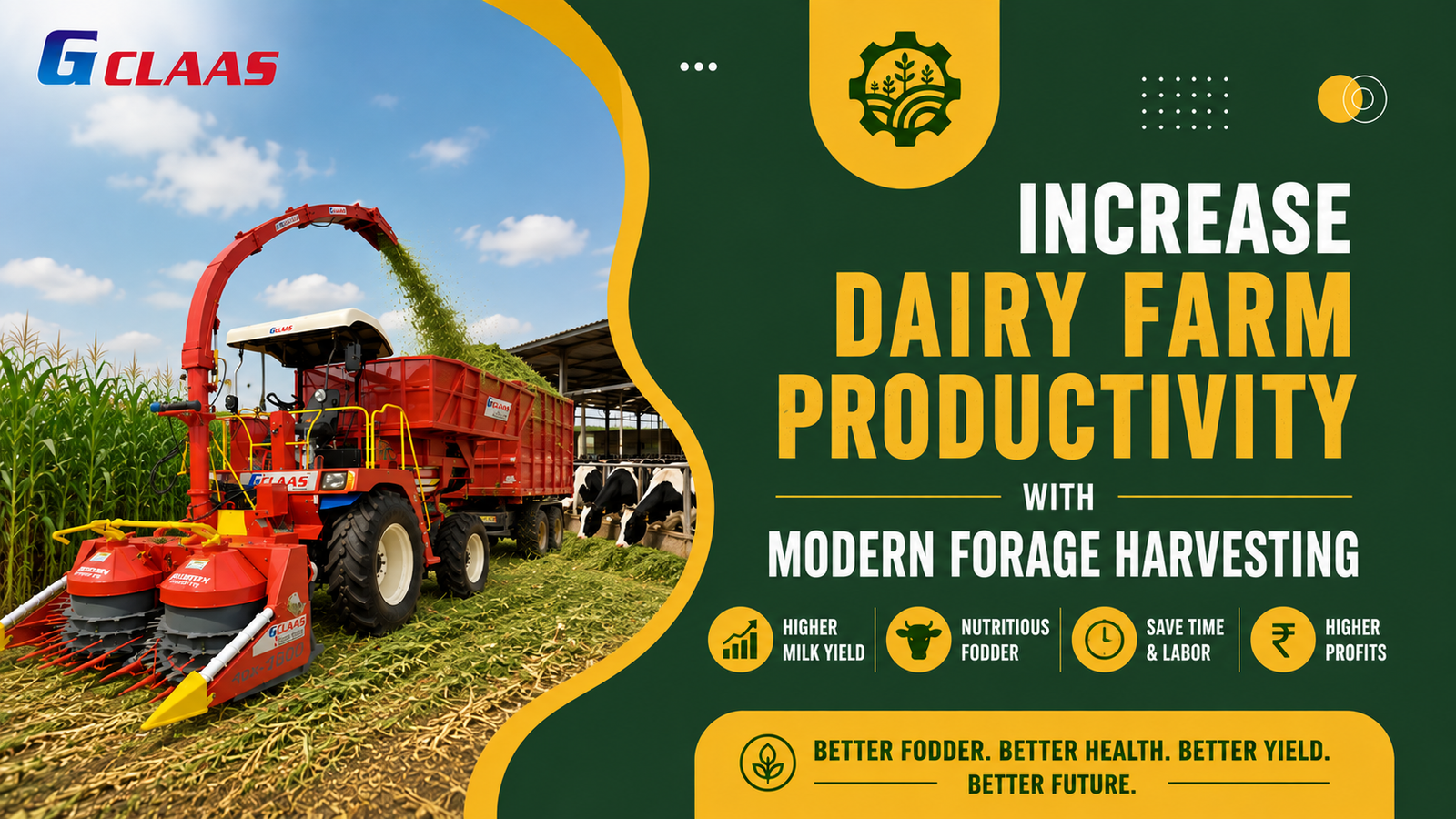

India is one of the biggest producers of milk in the world, and dairy farming is a major source of income for millions of farming families. Better breeds of cattle and better farm management have led to higher milk production. But one thing has not changed at the heart of every successful dairy operation: quality fodder. Even the most powerful of beasts cannot perform to their best unless they are constantly supplied with food of a nutritious character.
Traditionally, harvesting fodder is labour-intensive, takes up valuable time, and can result in uneven chopping or loss of nutrients. With labour shortages and input costs on the rise, many dairy farmers are looking at modern harvesting solutions to improve efficiency and lower operating costs.
This is where modern forage harvesting really comes into its own. Advanced forage harvesters allow farmers to quickly harvest green fodder, prepare high-quality silage, and ensure their livestock receive balanced nutrition throughout the year.
G. Claas is committed to helping Indian dairy farmers with reliable forage harvesting solutions for agricultural mechanisation that increase productivity, improve feed quality, and foster long-term farm profitability.
Also Read: Compare the Straw Reaper with the Forage Harvester: Which Machine Should Indian Farmers Choose?
Quality Fodder: The Foundation of Dairy Farming
The productivity of a dairy farm is directly proportional to the quality of feed given to the animals. Green fodder is a source of energy, protein, vitamins, and minerals that are needed for healthy growth and increased milk production.
When cattle are fed consistent, high-quality feed, farmers will often see:
- More milk production
- Increased Milk Fat Level
- Improved animal health
- Improved reproductive performance
- Lower vet bills
- Improved overall profit on the farm
But without the right harvesting equipment, it is hard to keep up a year-round supply of quality fodder.
The traditional method of fodder harvesting has its own problems.
Even today, many farmers still use manual harvesting or old equipment to prepare feed for their animals. These are all methods that might work on a small scale, but as dairy farms get bigger, they tend to become inefficient.
Common challenges:
- Labour-intensive
- process of slow harvest
- Increasing labour costs
- Non-uniform cutting of the fodder
- Greater crop losses
- Late harvest during peak seasons
- Loss of nutritional value from delays in harvesting
Such problems can directly affect the quality of the feed and ultimately the production of milk.
What is forage harvesting today?
Forage harvesting: In modern times, specialised machinery is used to cut, chop, and collect green fodder crops in one operation. Unlike the traditional methods, forage harvesters produce uniformly chopped material that is perfect for feeding livestock or preparing silage.
Typical crops harvested are the following:
- Sweet Corn Sorghum
- Napier Grass Oats
- Bajra Hybrid Fodder Grasses
The chopped fodder is gathered directly into a trailer, which makes transportation and storage much easier.
How modern forage harvesters increase dairy productivity
Harvesting Faster, Saving Precious Time The fodder should be harvested at the right stage so that the nutritional value is retained. Today’s forage harvesters allow farmers to complete the harvest much faster than manual methods.
Faster harvesting means the following:
- Cover more ground in less time.
- Less reliance on seasonal labour
- Reduced harvesting costs
- Timely execution of field operations
This efficiency enables the farmer to focus on other important issues of dairy management.
Uniform chopping means better silage.
A major benefit of today’s forage harvesters is that they provide consistently chopped fodder.
Consistent chop length helps:
- Enhance silage compaction
- Inducing proper fermentation
- Decrease spoilage
- Retain nutrients
- Boost feed digestibility
High-quality silage provides a reliable source of nutritious feed for livestock during the year, especially when fresh fodder is not available.
Better Feed Leads to Increased Milk Production
For healthy cattle to perform at their best, they require balanced nutrition.
Properly prepared silage and uniformly chopped green fodder are helpful in:
- Better feed intake
- Improved digestion
- More milk production
- Higher milk fat percentage
- Strong immune system.
Modern forage harvesting delivers better feed quality, which directly supports better dairy performance.
Reduced Feed Waste
Selective feeding is often the result of poorly chopped fodder, with the larger pieces of forage being left behind. This results in unnecessary feed wastage and increased costs.
Modern forage harvesters chop feed to a uniform length, which allows livestock to eat more efficiently and reduces waste.
Less wastage means better use of every acre of fodder grown.
Reduced Labour Costs
In much of India, skilled agricultural workers are becoming difficult to find. Labour shortages during the harvest season can slow operations and increase costs.
Modern forage harvesting equipment reduces the need for manual labour by cutting, chopping, and loading all in one continuous process.
- This allows farmers to
- Reduced labour costs
- All harvesting is on schedule.
- Increase operational efficiency
Why Silage is a Critical Part of Modern Dairy Farming
For the dairy farmer, silage is the key to success because it provides the cows with good nutrition when fresh grass is not available.
Well-prepared silage has several advantages:
- Year-round availability of fodder
- Better nutrient retention
- Better animal health
- Fewer seasonal feed shortages
- Reduced dependence on purchased feed
Today’s forage harvesters help producers make high-quality silage by providing uniform chopping and timely harvesting.
Selecting the proper forage harvester
Every dairy farm has its own requirements, so it is important to choose the right equipment to fit your operation. Farmers might consider.
Farm Size
Compact or tractor-mounted forage harvesters can be useful for small farms, but larger dairy farms will require higher-capacity machines.
Type of Crop
Pick a machine that will work with the fodder crops that you grow on your farm.
Harvest Capacities
Select equipment that can efficiently handle your seasonal harvesting load.
Maintenance Ease
Simple machines that you can maintain can cut down on the amount of downtime during busy harvest periods.
After-sales service
Reliable service and availability of spare parts are critical to continue operations.
How G-Claas is Supporting Indian Dairy Farmers
At G. Class, we believe that modern agricultural machinery should help farmers to work smarter and improve their long-term profitability.
machinery, G.
Our forage harvesting solutions are designed to meet the practical needs of Indian dairy farms with dependable performance, efficient processing of fodder, and reliable operation under various field conditions.
Besides providing machinery, G. Claas also supports farmers with:
- Quality harvesting equipment
- Robust design of machines
- Training for professional operators
- Readily available spares
- Prompt after-sales service
- Maintenance technical guidance and service
We want to give farmers the confidence to use modern harvesting technology and achieve better results, season after season.
The Future of Dairy Farming: Why Modern Mechanisation?
As the dairy farming industry continues to develop, mechanisation is becoming a necessity, not an option. Modern harvesting equipment allows farmers to overcome shortages of labour, reduce operating costs, and improve the quality of feed.
Investing in advanced forage harvesting technology enables farmers to:
- Enhance operational efficiency
- Produce better silage
- Enhancing livestock nutrition
- Increase milk production
- Shorten harvesting time
- Increase farm profitability long-term
All these benefits make modern forage harvesting a worthy investment for the progressive dairy farmers across India.
Also Read: Why Quality Silage Starts with the Right Forage Harvester
Conclusion
A good dairy farm starts with good fodder, and good fodder starts with good harvesting. Modern forage harvesters enable farmers to harvest at the right stage, make uniformly chopped silage, reduce labour costs, and maintain the nutritional value of each harvest.
By using advanced forage harvesting technology, dairy farmers can improve the health of their cattle, increase milk production, and develop a more sustainable farming operation.
At G Claas, we are proud to be part of the growth of India’s dairy sector with reliable forage harvesting solutions that help farmers boost productivity while getting ready for the future of modern agriculture. “With the right equipment and the right partner, every harvest is an opportunity to get stronger and more profitable.
FAQs (Frequently Asked Questions)
1. What are the modern forage harvesting techniques to improve the productivity of dairy farms?
Ans: Modern forage harvesting means faster harvests, uniform chopping of fodder, better silage quality, lower labour costs, and improved livestock nutrition, all of which lead to higher milk production.
2. What is the importance of silage for a dairy farm?
Ans: Silage is nutritious fodder, fed throughout the year, in particular when fresh fodder is not available. It keeps cattle healthy, increases milk production, and lessens the shortage of feed in the dry season.
3. What can you harvest with a forage harvester?
Ans: A forage harvester is widely used for harvesting maize, sorghum, Napier grass, oats, bajra, and other green fodder crops raised for silage production and feeding livestock.
4. Is a forage harvester a good option for small dairy farms?
Ans: Yeah. Small and medium-sized dairy farms can achieve efficient harvesting and keep operating costs under control with compact, tractor-mounted forage harvesters.
5. Why opt for G-Class forage-harvesting solutions?
Ans: G Claas offers dependable forage harvesters suited to Indian farming conditions, backed by professional training, reliable after-sales service, readily available spare parts, and machines that boost harvesting efficiency and dairy farm productivity.